
,format(webp))

There are dresses you buy for a very specific occasion. And then there are dresses you keep reaching for because, somehow, they always make sense.
The A-line dress falls firmly into the second category.
You might be heading into the office, meeting your girlfriends for brunch, attending a wedding or figuring out what to wear when you want to look put together but don't want to spend 40 minutes staring at your wardrobe. An A-line dress has a way of fitting into all those moments.
An A-line dress’ shape is simple: more fitted through the top, then gradually flaring out towards the hem. But that small shift in proportion changes how the whole outfit sits on the body. There’s definition around the waist, room through the hips, and movement through the skirt.
Basically, it understands that you would like to look polished and sit down comfortably. A reasonable request, really.
Here’s everything to know about the A-line dress, from how it fits to how to style it for the life you actually have. Let’s dig it together.
What Is an A-Line Dress?
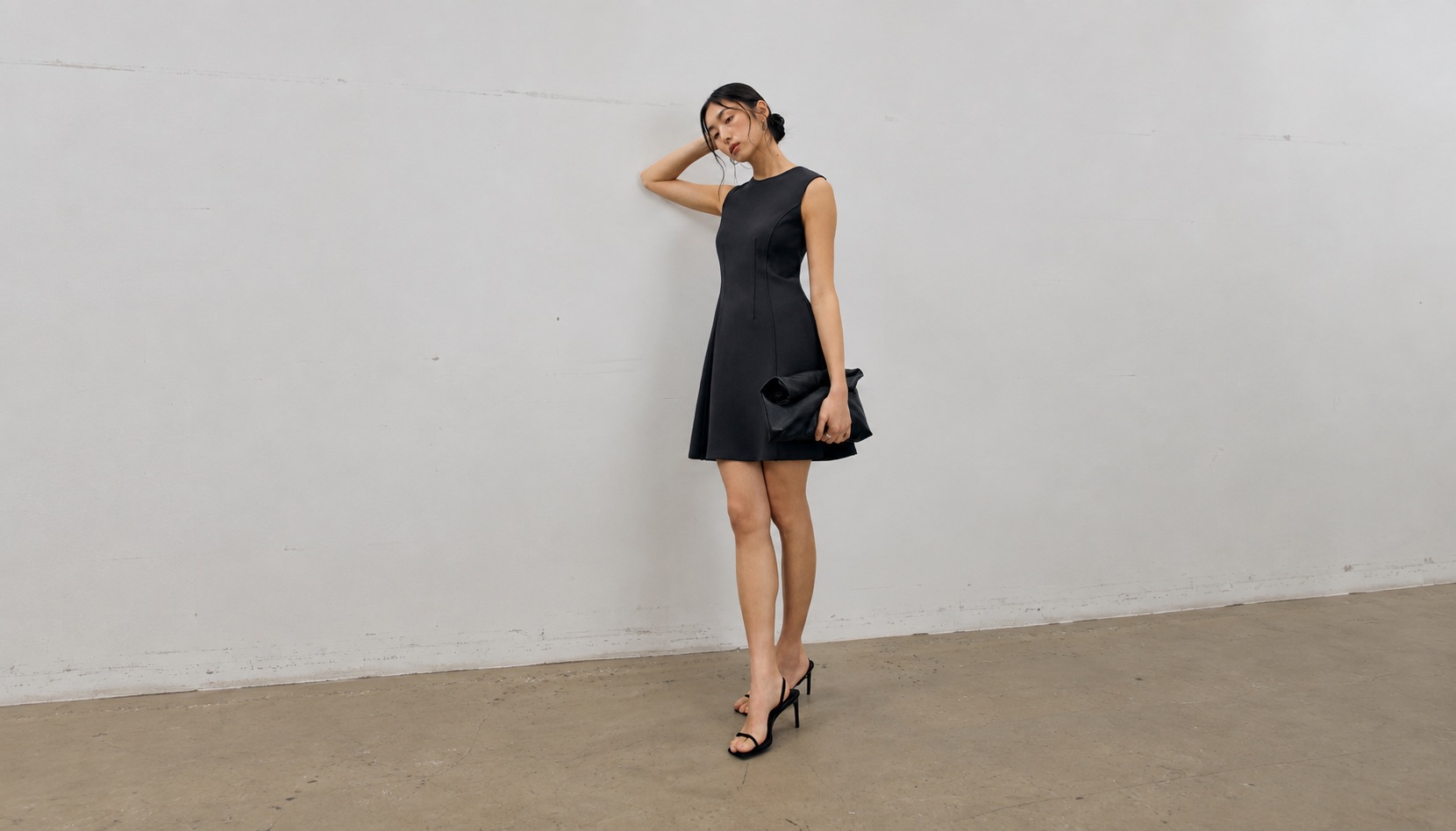
An A-line dress is named after its silhouette. The bodice is usually more fitted, and the skirt gradually widens towards the hem, creating a shape similar to the letter “A”.
The flare can be subtle or more pronounced, depending on the design. What matters is the overall proportion: narrower at the top, wider at the bottom.
This creates a silhouette that feels structured without feeling restrictive. The bodice brings definition, while the skirt moves away from the body rather than sitting closely against the hips and thighs.
A classic A-line dress usually has:
A more fitted bodice or upper body
Definition around the waist
A skirt that gradually flares towards the hem
A clean shape that skims rather than clings
That’s also why the silhouette works across different dress lengths. A mini A-line can feel playful and easy for the weekend. A midi version often feels more polished. A longer A-line dress can work beautifully for weddings and other special occasions.
Same basic shape. Very different plans.
Why Do A-Line Dresses Work So Well?
The magic is really in the proportions.
The fitted upper half creates shape, while the wider skirt creates space and movement below the waist. Your eye naturally follows that balanced line from the shoulders down.
For women who prefer a little definition around the waist but don’t necessarily want a body-hugging dress, the A-line shape often hits a sweet spot.
It can also feel particularly practical for real life.
You can walk quickly when you're running late. Sit through a long lunch. Take public transport. Eat a proper meal. Spend hours at an event without constantly thinking about whether your outfit is sitting correctly.
And honestly, clothes should allow you to have a life in them.
That doesn't mean every A-line dress will look identical on everyone. The fabric, waist placement, neckline and amount of volume in the skirt all affect the final silhouette. Finding the right version is less about following a body-shape rulebook and more about noticing what proportions you enjoy wearing.
How Should an A-Line Dress Fit?
A good A-line dress should feel more fitted through the top and gradually become easier through the skirt.
Start with the shoulders and bust. The shoulder seams should sit comfortably in place, and the bodice should lie smoothly without pulling or gaping.
Around the waist, you want definition—not a wrestling match.
The waist seam may sit at your natural waist, slightly above it or, in some designs, below the bust. Wherever it sits, it should create a shape that feels comfortable when you're standing, sitting and moving around.
From the hips down, the skirt should fall cleanly away from the body. The fabric shouldn't pull across the hips or bunch awkwardly when you walk.
The overall effect should feel balanced.
If the bodice is structured and the skirt has movement, you get that familiar A-line shape. If everything is tight from top to bottom, you're moving into a different silhouette entirely.
A-Line vs Other Dress Shapes: What's the Difference?
A-line dresses have a few close relatives, so it's easy to confuse them.
A-Line vs Fit-and-Flare
Both styles are fitted through the upper body and open out through the skirt. The difference is usually in the amount of volume.
A fit-and-flare dress tends to have a more obvious, dramatic skirt that fans out from the waist. An A-line usually creates a smoother and more gradual line.
Think of fit-and-flare as more playful and full-skirted. An A-line feels cleaner and more streamlined.
A-Line vs Shift Dress
A shift dress falls more straight from the shoulders and usually has less waist definition.
An A-line dress creates more shape through the body before widening towards the hem.
If you enjoy a relaxed, straighter silhouette, a shift dress might feel more natural. If you like seeing a little waist definition in your outfit, an A-line often feels more familiar.
A-Line vs Sheath Dress
A sheath dress follows the body's shape more closely from the shoulders to the hem.
An A-line opens out through the skirt.
The difference becomes especially noticeable when you're moving around. A sheath creates a closer, more streamlined outline, while an A-line has more room through the lower body.
A-Line vs Empire Waist
An empire-waist dress has its waistline positioned just below the bust, with the skirt flowing from there.
A traditional A-line usually defines the waist closer to the natural waistline.
However, an empire-waist dress can still have an A-line skirt. Fashion silhouettes love making things slightly confusing. We didn't make the rules.
Choosing the Right Fabric for an A-Line Dress
Fabric can completely change how an A-line silhouette feels.
A cotton or linen A-line dress has an easy, breathable quality that works beautifully in warm weather. Think weekends, café catch-ups and long afternoons outdoors when the humidity is already doing far too much.
Structured fabrics such as crepe can create a cleaner outline. The skirt holds its shape more clearly, which often makes the dress feel more polished for work or occasions where you want a sharper silhouette.
Knits bring a softer approach. Depending on their weight and construction, they can follow the body more closely while still opening out through the skirt.
Satin creates a completely different mood. The way it catches the light and moves with the body makes an A-line shape feel more suited to dinners, celebrations and weddings.
The silhouette may stay the same, but the fabric changes the experience of wearing it.
Mini, Midi or Maxi: Which A-Line Length Should You Choose?
There isn't one correct answer here. Your plans—and your personal preference—usually make the decision easier.
Mini A-Line Dresses
A shorter A-line dress feels lighter and more playful. Pair it with flats or sandals for casual plans, or add a jacket and boots when you want a little more structure.
Midi A-Line Dresses
The midi is often the middle ground many wardrobes appreciate.
It has enough length to feel polished but doesn't require the formality of a full-length dress. A midi A-line can work for the office, lunch, celebrations and wedding guest plans with a few styling changes.
Maxi A-Line Dresses
A maxi A-line creates a longer, more sweeping silhouette.
In lightweight fabrics, it can feel relaxed and breezy. In satin, chiffon or more structured materials, it naturally suits more formal occasions.
The length changes the mood, but the same principle remains: definition at the top, movement below.
How to Style an A-Line Dress for Different Occasions
For Everyday Plans
A cotton or linen A-line dress works beautifully with flat sandals, sneakers or simple slides.
You don't need much else. Add a bag that suits your day, maybe a pair of sunglasses, and you're out the door.
Perfect for brunch, errands that somehow turn into lunch, or spending a Saturday moving between plans with your best friend.
For Work
Choose an A-line dress with a cleaner shape and pair it with a light layer or blazer.
The defined silhouette already brings some structure, so you don't need to pile on accessories. A simple pair of flats, loafers or low heels can finish the outfit depending on your workplace and commute.
Because yes, looking professional matters. But so does being able to breathe after lunch.
For Weddings and Special Occasions
A-line dresses work particularly well for celebrations because the shape feels polished without being overly restrictive.
Look for interesting textures, considered prints or fabrics with a little movement. Pair with heeled sandals and jewellery that complements the neckline rather than competing with it.
You'll look appropriately dressed for the photos—and still be comfortable enough to stay until dessert.
Accessories That Work with A-Line Dresses
The shape of an A-line dress already creates a clear silhouette, so accessories can be chosen based on the mood you want.
A belt can add extra waist definition. Delicate jewellery works beautifully with open or simple necklines. Structured bags bring a sharper finish, while softer bags can make the outfit feel more relaxed.
For shoes, flats and sandals keep things easy. Loafers can add a more polished edge, while heels work naturally for dressier occasions.
The best styling usually comes down to balance. If the dress has volume, you might prefer simpler accessories. If the dress is clean and minimal, you have more room to play.
Why You Might Want an A-Line Dress in Your Rotation
The A-line dress has lasted this long for a reason.
It understands proportion. It creates shape without requiring everything to be fitted. It moves with you and can look completely different depending on the fabric, length and styling.
More importantly, it works for the many versions of a woman's life.
The woman heading to a client meeting. The one meeting her sister for dinner afterwards. The mum trying to get everyone out the door. The friend who always says she's only staying for one drink. The woman who simply wants to wear something that makes getting dressed feel a little easier.
An A-line dress won't solve your calendar.
But it might solve the “what am I wearing?” part of it—and some days, that's more than enough.